New Report Shows Californians Are Looking for Support After Experiencing Hate
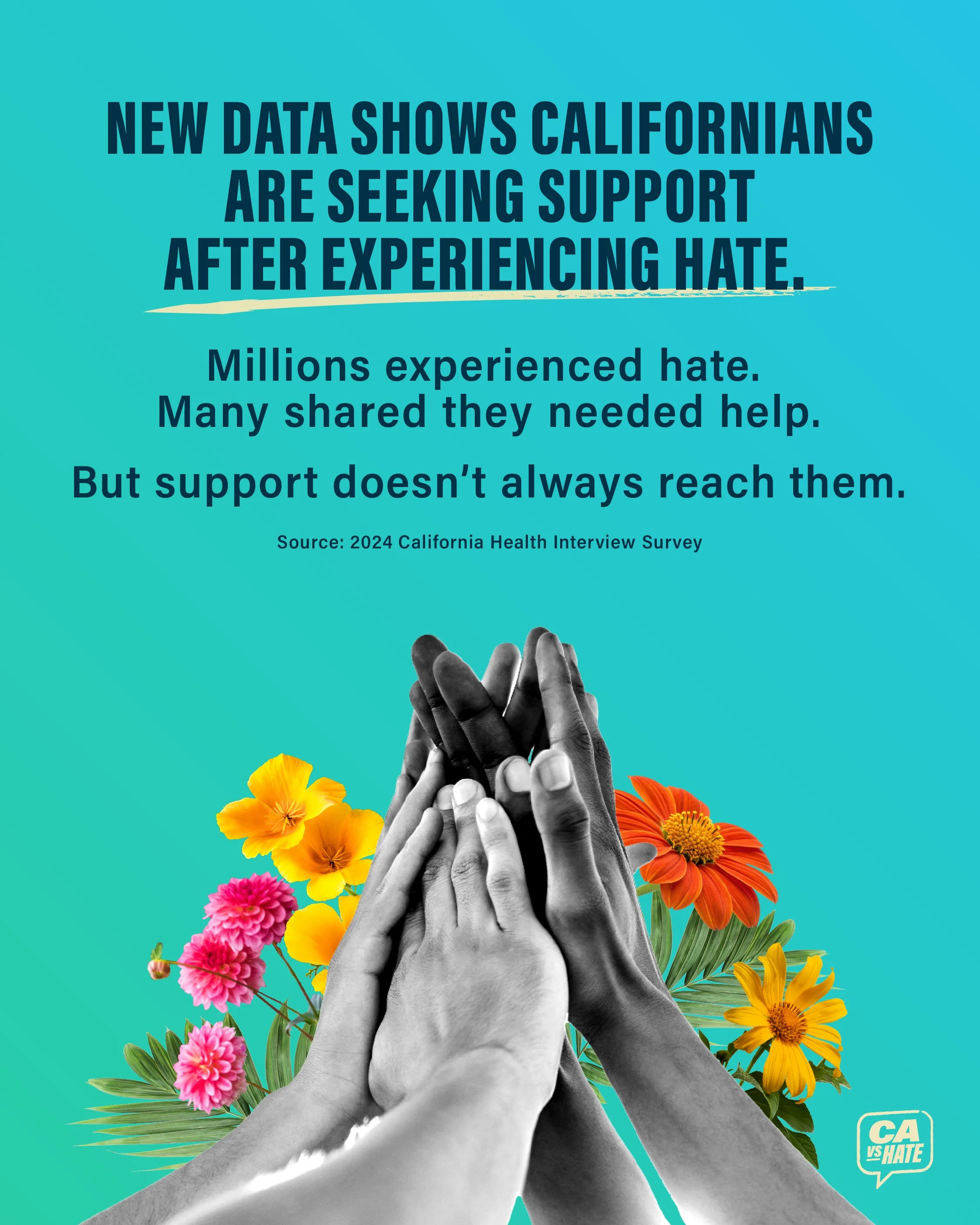
A new report from the UCLA Center for Health Policy Research, released in partnership with the California Civil Rights Department and Commission on the State of Hate, shows that millions of Californians are not only experiencing hate — they want help afterward. The data highlights both the scale of hate across the state and the significant gaps in people getting the support they need to feel safe, heal, and move forward.
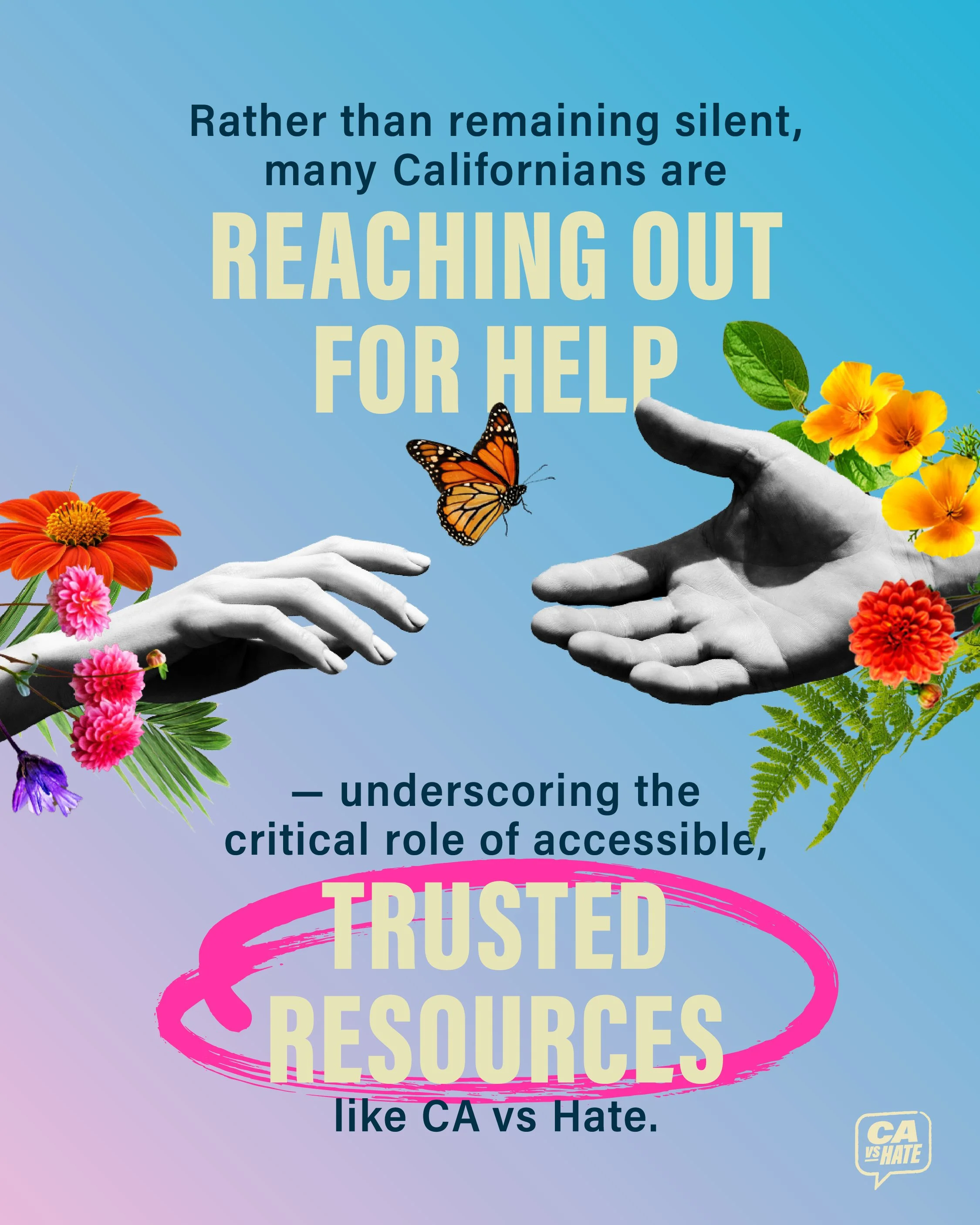
Rather than remaining silent, many Californians are reaching out for help, underscoring the critical role of accessible, trusted resources like CA vs Hate.
Hate Is Widespread – And Not Everyone Is Getting Support
According to the 2024 California Health Interview Survey (CHIS), nearly 3.1 million Californians ages 12 and older experienced a hate act in the past year. Hate acts include both crimes and non-criminal incidents fueled by bias — physical violence, verbal abuse, vandalism, cyberbullying, and more.
Of note, the report shows that many people who experienced hate recognized they needed support.
Key takeaways:
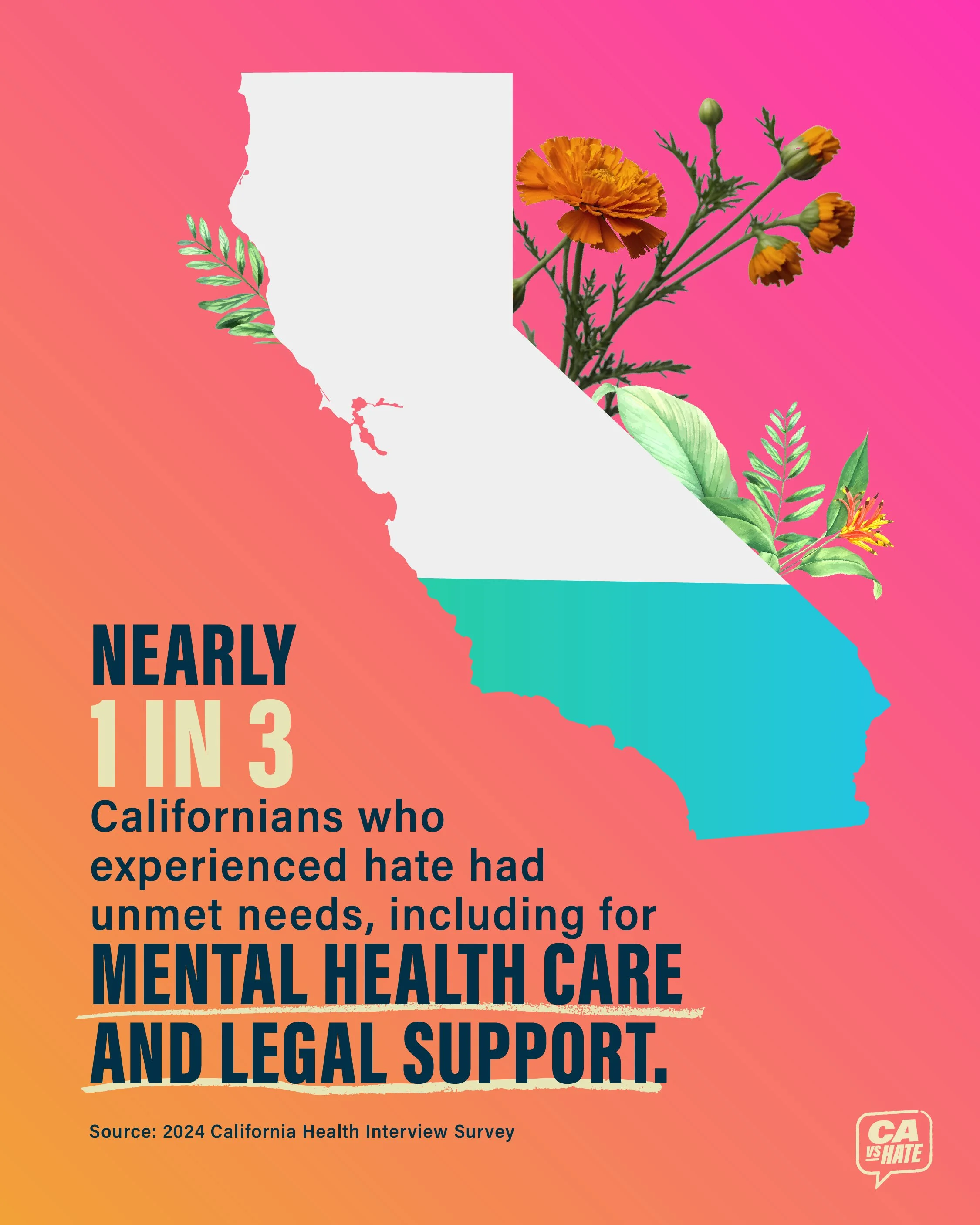
31% of people who experienced hate had unmet support needs.
20% experienced six or more hate acts within one year.
Rates of unmet needs were higher for some groups: American Indian or Alaska Native (44%), Black or African American residents (42%), adults with unstable housing (50%), and adults with disabilities (41%). Women were more likely than men to report unmet needs (37% vs 25%).
These findings make clear that Californians want mental health care, legal assistance, workplace support, and protection, but too often face barriers when trying to access those services.
Hate Impacts Every Part of People’s Lives
Using interviews with Californians who experienced hate, the report’s companion qualitative study examines how deeply these incidents can affect daily life, and why people are looking for support in the first place. Many described:
Avoiding certain stores, bus routes, or public spaces.
Installing fences or security cameras to feel safe at home.
Withdrawing from neighbors or community interactions out of fear or distrust.
Experiencing ongoing stress, anxiety, sleep disturbance, or physical symptoms.
Absorbing unexpected financial costs tied to safety or property damage.
Respondents shared that hate acts changed where they shop, how they commute, and even how they interact with neighbors. One respondent noted they no longer felt comfortable letting their children play in the front yard. Another described no longer trusting people in their own neighborhood. Some felt less safe in their own homes, installing security cameras, fencing, or avoiding being outside. Others described growing distrust, anxiety, or physical symptoms after the incident.
Others shared that these impacts lingered long after the incident itself, creating an ongoing need for emotional, legal, and practical support. Respondents also described financial strains, from repairing property damage to spending money on rideshare services instead of public transit.
These stories show that hate’s impacts can go far beyond a single moment,affecting mental health, physical safety, daily routines, and a sense of belonging.

Why CA vs Hate Matters
The UCLA findings point to a clear conclusion: Californians need help after experiencing hate, and they need a trusted place to turn.
These findings also underscore why a statewide and accessible reporting option is critical. CA vs Hate provides a safe, confidential place for people to report hate and connect to support in over 200 languages, including:
Legal aid
Mental health services
Financial assistance
Mediation
Victim advocacy
Civil rights reporting
By providing access to culturally-competent, trauma-informed services, CA vs Hate aims to help Californians feel seen, supported, and empowered to take action after experiencing hate.
